
Dependency OR Navel linear (2017) installation, sculpture - plaster, cables, branches, human umbilical cord and hair, rubber, silicone, various plastic tubes - dimensions variable


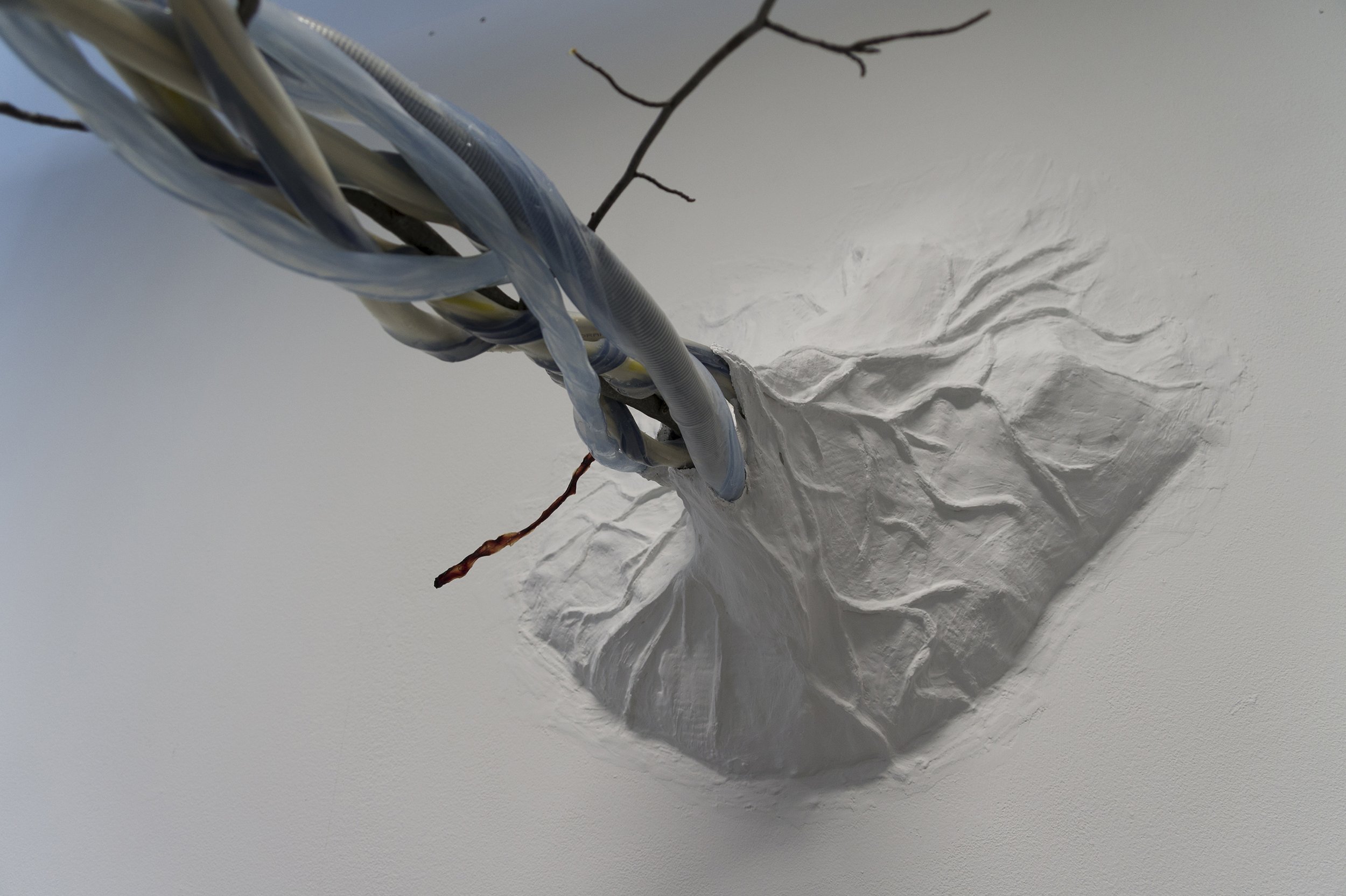

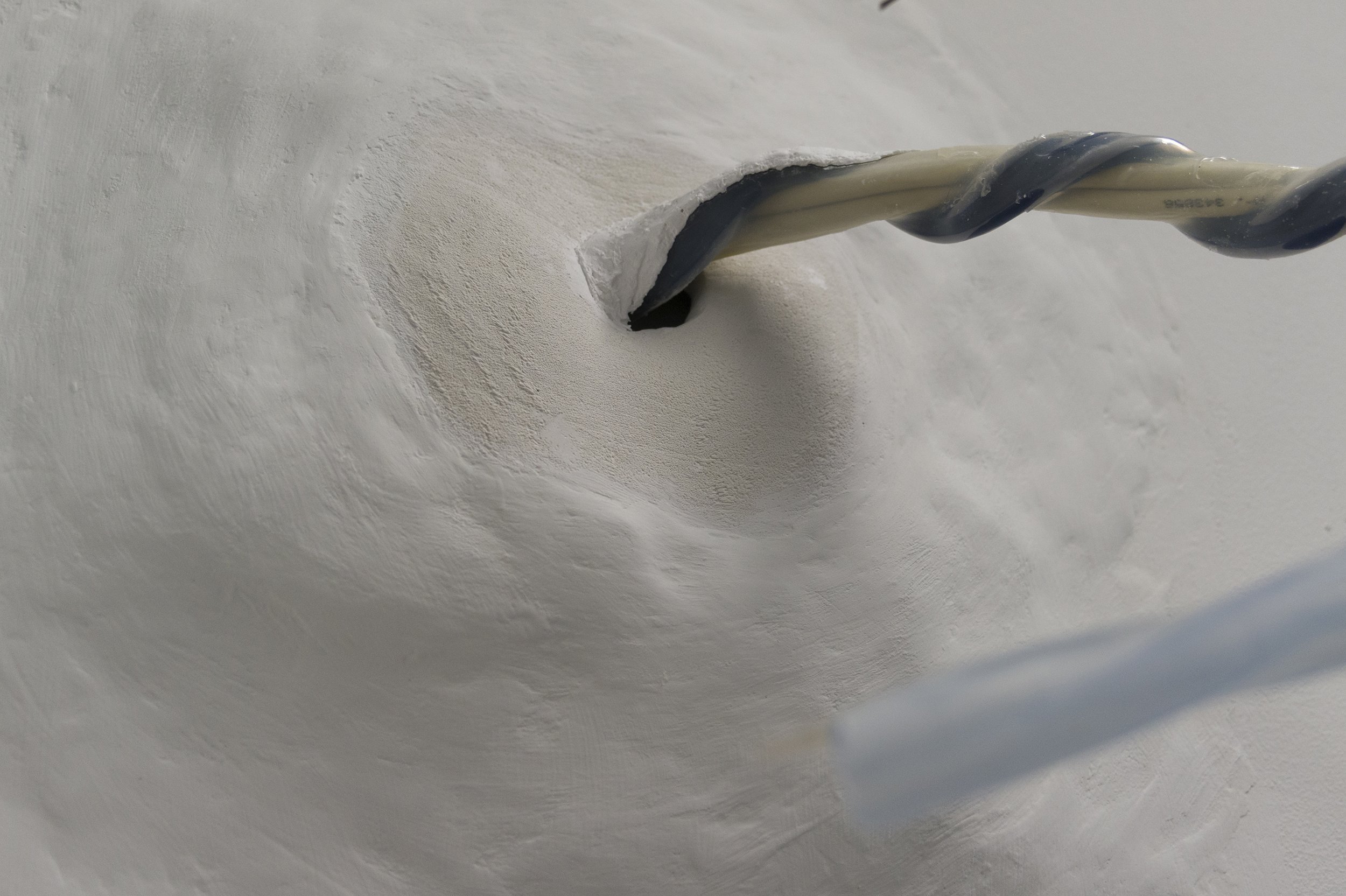


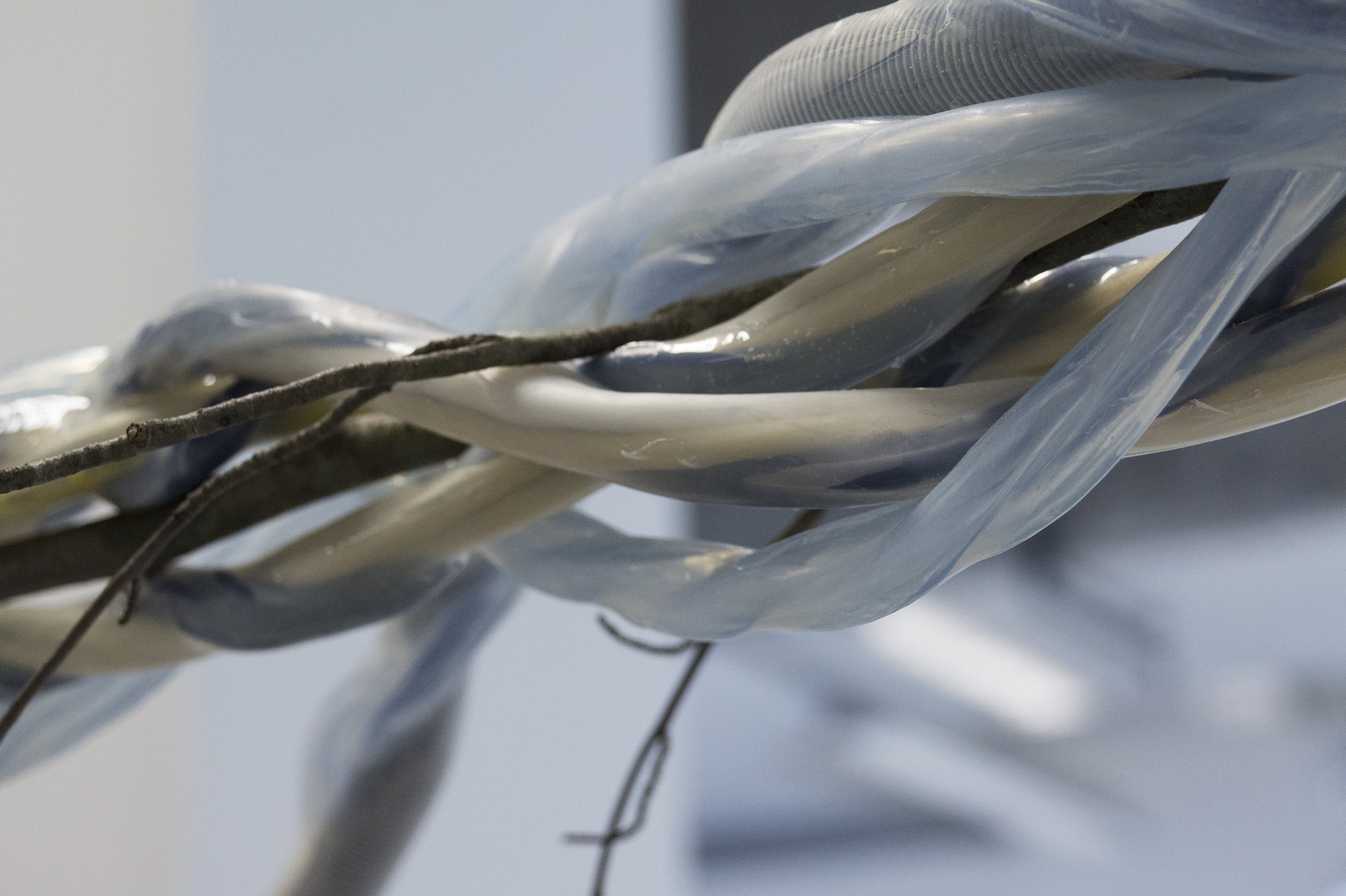


In this sculptural work, slippery, umbilical-cord-like strands grow out of a root-like formation emerging from one wall, and lead, on the opposite sides, into human abdominal impressions cast in plaster. These strands - cables coated with a silicone-rupper mixture - are visually modelled after the appearance of a still-pulsating human umbilical cord. The work also includes other materials, such as a dried umbilical cord, and on one of the abdominal casts human hairs are visible, torn out during the moulding and casting process. On another abdominal cast, if one looks closely, stretch marks can be seen.
Starting from the very first, elemental relationship of dependency experienced by each of us - the one between mother and child in the womb - I engaged, in the work Dependency OR Navel linear, with several questions: Where does a human being begin, and where do they end? Does something like an individual exist - an indivisible, self-contained human subject? In a patriarchal, capitalist society, great value is placed on independence. Conversely, dependency tends to be viewed and connoted negatively. This can also be seen in the lack of appreciation or the difficulties faced by those who care for another person, or in which pregnancies and forms of motherhood are supported by society and which are sanctioned. The work presented here counters this culture, this idea of the human being as an individual, with an image that on the one hand evokes associations with high-perfomance medicine and the merging of humans and technological elements, and on the other nourishes the thought that - regardless of how much time passes - we are all, quite literally, connected to one another through our flesh and blood in a matrilineal way.